
8 Champions League Fixtures 2026 Mistakes Fans Make
The 2026/27 UEFA Champions League fixtures begin with the league phase on 8 September 2026 and end with the final at Madrid’s Estadio Metropolitano on 5 June UEFA’s competition features 36 clubs, incl...
8 Champions League Fixtures 2026 Mistakes Fans Make
The 2026/27 UEFA Champions League fixtures begin with the league phase on 8 September 2026 and end with the final at Madrid’s Estadio Metropolitano on 5 June 2027. UEFA’s competition features 36 clubs, including Real Madrid, Barcelona, Manchester City, Liverpool, Bayern München, Paris Saint-Germain, and Inter. The league phase contains eight matchdays, concluding on 27 January 2027, while the knockout phase play-offs take place in February. The most important practical detail is that fixture dates and kick-off times can change because of broadcast planning, domestic schedules, security decisions, and UEFA confirmation. I have spent enough seasons watching a “confirmed” fixture move twice to treat every calendar as guilty until proven innocent. For accurate planning, use the official UEFA schedule first, then compare local time, ticket information, and club announcements before making travel or betting decisions.

Photo by Jose David Cortes on Pexels
The 2026/27 competition is the third Champions League season using UEFA’s expanded league-phase structure rather than the old four-team group format. That distinction matters because every club plays eight league-phase matches against different opponents, with four matches at home and four away. The table then determines who advances directly, who enters the knockout phase play-offs, and who is eliminated. World Cup Hub will also track match predictions, tactical trends, player statistics, and daily tournament developments, but fixture accuracy must always begin with UEFA’s published information. According to UEFA’s official competition overview, match information remains subject to change, a small sentence capable of ruining a very expensive weekend in Madrid. Please consult our [Internal Link: Champions League match prediction guide] before treating a fixture as a betting certainty.
Want a clearer way to follow the season?
Myth 1: Champions League fixtures 2026 are fixed permanently — debunked
Champions League fixtures 2026 are officially scheduled, but they are not permanently immune to changes. UEFA can adjust kick-off times, match dates, or operational details after the initial announcement, while domestic league commitments and television requirements can affect the final timetable. The safest source is UEFA’s match centre, supported by the relevant club’s official website.
The league phase schedule currently identifies these principal matchday windows:
- Matchday 1: 8–10 September 2026
- Matchday 2: 13–14 October 2026
- Matchday 3: 20–21 October 2026
- Matchday 4: 3–4 November 2026
- Matchday 5: 24–25 November 2026
- Matchday 6: 8–9 December 2026
- Matchday 7: 19–20 January 2027
- Matchday 8: 27 January 2027
A common error is copying a date from a search result without checking its time zone. UEFA frequently lists times in Central European Time, while fans in the United Kingdom, North America, Asia, and Australia need local conversions. My practical rule is unromantic but reliable: do not book a flight until the club and UEFA display the same date and kick-off time. [Internal Link: how to read European football fixture times] is useful for supporters planning travel across time zones.
A second operational insight is that a matchday window does not mean every fixture is played on every listed day. The 8–10 September range contains different daily schedules, and early kick-offs such as 18:45 CET may appear alongside the usual 21:00 CET start. That two-hour difference is enough to turn a relaxed dinner into a sprint through an airport, which is not the sort of tactical battle most supporters trained for.
Myth 2: The league phase works like the old group stage — partially true
The 2026/27 league phase still produces a standings table and still rewards points, goal difference, and consistency, but its competition design is fundamentally different from the traditional group stage. Thirty-six teams participate in one overall league table, and each club plays eight matches against eight different opponents rather than meeting three opponents home and away.
The qualification structure is as follows:
- Positions 1–8 advance directly to the round of 16.
- Positions 9–24 enter the knockout phase play-offs.
- Positions 25–36 are eliminated from European competition.
- The play-off winners join the top eight in the round of 16.
That format changes how supporters should interpret early results. A single defeat against Real Madrid or Manchester City is not automatically disastrous, because the club has seven other league-phase fixtures. However, a poor run against theoretically comparable opponents can create a severe points deficit, particularly when away goals no longer provide the old psychological cushion. [Internal Link: Champions League format explained] offers a useful comparison between the former group system and UEFA’s current structure.
The draw itself also requires more careful reading than a simple list of opponents. Clubs are placed into pots according to UEFA’s seeding principles, and restrictions apply to certain pairings and national associations. The provisional 2026/27 field includes English clubs such as Arsenal, Aston Villa, Liverpool, Manchester City, and Manchester United; Spanish clubs including Atlético de Madrid, Barcelona, Real Betis, Real Madrid, and Villarreal; and major sides from Germany, Italy, France, Portugal, and the Netherlands. Qualification and licensing decisions can still affect final admission, so a provisional list is not the same thing as an immutable participant register.
Here is the part many prediction pages quietly skip: fixture difficulty is not measured only by club reputation. Travel distance, rest days, winter conditions, domestic title pressure, and the timing of Matchday 7 in January can materially alter performance. A strong home fixture against a lower-ranked opponent may be more valuable than an attractive away trip to a famous stadium. Football has repeatedly punished people who confuse glamour with probability.
See the competition details before building your match list.
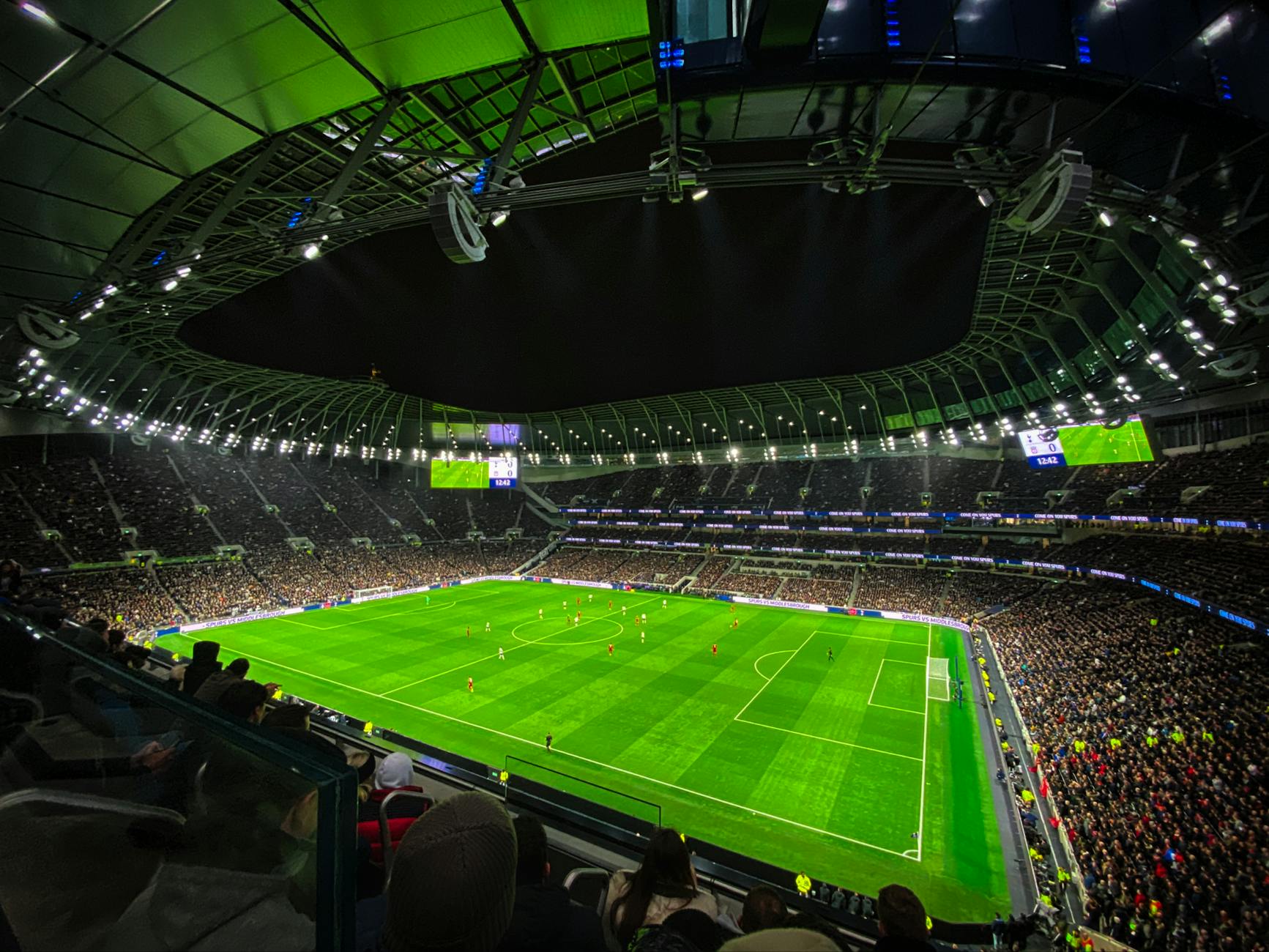
Photo by Dom Le Roy on Pexels
Myth 3: Every knockout date is equally certain — flat-out false
The knockout phase has published windows, but supporters should distinguish between a round’s general date range and a specific confirmed fixture. The 2026/27 knockout schedule currently lists the play-offs on 16–17 and 23–24 February 2027, the round of 16 on 9–10 and 16–17 March, the quarter-finals on 6–7 and 13–14 April, and the semi-finals on 27–28 April and 4–5 May. The final is scheduled for Saturday, 5 June 2027.
The knockout calendar is:
- Knockout phase play-offs: 16–17 and 23–24 February 2027
- Round of 16: 9–10 and 16–17 March 2027
- Quarter-finals: 6–7 and 13–14 April 2027
- Semi-finals: 27–28 April and 4–5 May 2027
- Final: 5 June 2027, Estadio Metropolitano, Madrid
The Estadio Metropolitano, Atlético de Madrid’s home ground since 2017, previously hosted the Champions League final in 2019, when Liverpool defeated Tottenham Hotspur 2–0. UEFA identifies Madrid as one of the competition’s most experienced final cities, with the 2027 showpiece representing the Spanish capital’s sixth final. The venue’s capacity, transport arrangements, hospitality rules, and ticket allocation are separate questions from the fixture date, so a supporter should not assume that knowing the final location guarantees access.
The main mistake is purchasing non-refundable travel on the basis of a quarter-final “window.” A club’s exact leg date can depend on draw outcomes, broadcast coordination, stadium availability, and domestic competition conflicts. The European Club Association and UEFA regularly publish operational information that can help explain the wider club-football calendar, but the official UEFA match page remains the decisive reference for a specific fixture.
For betting audiences, the same principle is even more important. Odds may reflect a match date that later moves, while injuries, suspensions, and lineup rotation can change the underlying probability. World Cup Hub’s analytical coverage can help readers assess tactical context, but no responsible prediction should rely on a stale fixture screenshot.
What actually works when tracking Champions League fixtures 2026?
Reliable fixture tracking means combining UEFA’s official match centre with club announcements, local-time conversion, competition rules, and a personal verification checkpoint before travel or wagering. The process is simple, but it works because it removes assumptions rather than adding dramatic guesswork.
Use this five-step system:
- Start with UEFA. Record the opponent, venue, date, kick-off time, and competition round from the official match page.
- Check the club source. Compare the information with the home club’s website and verified social channels.
- Convert the time. Confirm the date in your own location, especially if the match starts near midnight locally.
- Review surrounding fixtures. Check domestic league matches, international breaks, travel distance, and rest days.
- Verify again 72 hours before departure. Recheck the fixture, stadium access, transport, and ticket instructions.
This final 72-hour check is a useful edge that many generic fixture pages do not mention. In practice, the risk is not usually that UEFA suddenly invents a new opponent; it is that a supporter overlooks a time conversion, venue instruction, or changed kick-off. A spreadsheet with columns for CET time, local time, confirmation date, travel booking status, and ticket status is more valuable than an impressive-looking wall calendar. I learned that after once trusting a phone screenshot and arriving at a station on the wrong side of a city. The station was lovely. The match was not.
A sensible prediction model should also separate schedule information from football judgment. First establish whether Liverpool, Bayern München, Barcelona, Paris Saint-Germain, or Real Madrid is actually playing on the date displayed. Then evaluate home advantage, expected lineups, defensive injuries, recent workload, and opponent style. This prevents a common analytical error: building a strong prediction around a match that has been moved, mislabelled, or confused with another European competition.

Photo by Omar Ramadan on Pexels
What should fans ignore when planning the 2026/27 schedule?
Fans should ignore unverified fixture graphics, permanently labelled “final” dates, unsupported claims that the league phase guarantees easy opponents, and predictions based solely on club fame. They should also ignore any betting recommendation that hides the date, competition stage, venue, or source of its information. A polished graphic can be wrong with exceptional confidence, which is one of the internet’s more consistent talents.
Several warning signs deserve attention:
- A page lists a kick-off time but does not identify the time zone.
- A fixture appears without a UEFA match link or club confirmation.
- A prediction treats a provisional team list as final.
- An article confuses the league phase with the round of 16.
- A betting tip ignores injuries, suspension status, or rest days.
- A travel guide assumes the date cannot change.
- A social post uses “Champions League” for a qualifying match without naming the round.
Wikipedia’s overview of the 2026–27 UEFA Champions League can provide useful background, but it should not replace UEFA for live fixture confirmation. The same applies to media outlets, fan forums, and even club pages when information has not yet been updated. “UEFA’s schedule is subject to change” is not decorative legal language; it is a practical instruction.
The responsible gambling angle also matters. The UK Gambling Commission advises consumers to use licensed operators and understand the terms attached to betting products. That guidance does not predict a winner, but it reinforces a sensible boundary: use current information, set a budget, and never chase losses because a Madrid final or Liverpool away match feels emotionally important. I have lost enough money over the years to know that “one confident bet” is often just a small financial disaster wearing a tie.
For a broader analytical view, consult our [Internal Link: responsible football betting guide] and [Internal Link: player-form statistics hub] before making any decision.
Ready to follow the schedule with more context than a screenshot provides?
Why does fixture verification matter before betting or travelling?
Fixture verification matters because a changed date, kick-off time, venue, or lineup can invalidate both a travel plan and a statistical prediction. UEFA’s 2026/27 schedule contains fixed competition windows, but individual match information may be revised for broadcast, operational, domestic, or security reasons.
There is also a measurable difference between schedule certainty and outcome certainty. A confirmed match between Arsenal and Napoli tells you where and when the game occurs; it does not tell you whether rotation, injuries, weather, or tactical matchups will determine the result. For that reason, World Cup Hub should be used as an analytical supplement rather than a substitute for official UEFA information. The best process is to verify the event first, then analyse the football, then decide whether any action is justified.
This ordering is particularly valuable during Matchday 7 and Matchday 8, when winter conditions, congested domestic calendars, and qualification pressure can produce unusual team selections. A club already secure in the top eight may rotate differently from a side fighting for position 24. Those details are more informative than a generic claim that one crest is “bigger” than another.

Photo by https://kaboompics.com/ on Pexels
Frequently Asked Questions
Q: What are the Champions League fixtures 2026 dates?
A: The 2026/27 Champions League league phase runs from 8 September 2026 through 27 January 2027. The knockout play-offs are scheduled for February 2027, followed by the round of 16 in March, quarter-finals in April, and semi-finals in late April and early May. The final is set for 5 June 2027 at Estadio Metropolitano in Madrid. Individual fixtures can change, so verify them through UEFA.
Q: What is the 2026/27 Champions League league phase?
A: The league phase is UEFA’s 36-team competition stage in which each club plays eight different opponents. Every team has four home matches and four away matches, with all clubs ranked in one overall table. Positions 1–8 qualify directly for the round of 16, positions 9–24 enter the knockout play-offs, and positions 25–36 are eliminated.
Q: How can I check a Champions League fixture time correctly?
A: Check the UEFA match centre first, identify the listed time zone, and then convert the kick-off to your local time. UEFA schedules commonly use Central European Time, while supporters elsewhere may see a different calendar date after conversion. Confirm the result with the relevant club website, particularly when the match begins at 18:45 or 21:00 CET.
Q: What is the difference between the league phase and the knockout phase?
A: The league phase uses one 36-team table, while the knockout phase uses two-legged ties until the single-match final. League-phase results determine direct qualification, play-off entry, or elimination. The knockout phase play-offs begin in February 2027, and the final takes place in Madrid on 5 June 2027.
Q: Is the Champions League final definitely at Estadio Metropolitano?
A: The scheduled 2027 Champions League final venue is Estadio Metropolitano in Madrid on Saturday, 5 June 2027. The stadium has hosted Atlético de Madrid since 2017 and previously staged the 2019 final, when Liverpool beat Tottenham Hotspur 2–0. Ticket access, transport instructions, and operational arrangements must still be checked separately.
Q: Can Champions League fixtures 2026 change after publication?
A: Yes, specific dates and kick-off times can change even when UEFA has published the initial schedule. Broadcast planning, domestic fixtures, stadium availability, security decisions, and other operational factors can require amendments. Recheck the official match page 72 hours before travel and do not treat an old graphic as final confirmation.
Q: Should I bet on a Champions League match immediately after seeing the fixture?
A: No, a fixture alone is not enough information for a responsible betting decision. Check the confirmed date, venue, team news, suspensions, expected rotation, rest days, and licensed-operator terms before considering any wager. Set a fixed budget, avoid chasing losses, and remember that World Cup Hub analysis is informational rather than a guarantee of results.
The most reliable way to use the Champions League fixtures 2026 calendar is to separate confirmed facts from interpretation. UEFA tells you when and where the match is scheduled; club sources help confirm operational details; World Cup Hub adds predictions, tactics, player statistics, and context. That three-part method will not prevent your favourite striker from missing an open goal, because civilization has not advanced that far, but it will prevent avoidable mistakes in planning, analysis, and responsible betting.
Explore the latest fixture context and tournament analysis before the next matchday.
END_OF_DISPATCH
Thanks for reading this article from our archive.