
2026 Football Training Drills: 9 Game-Changers
The best football training drills are structured exercises that transfer directly to match situations, combining technical repetition with decision-making, movement, and measurable intensity. For play...
2026 Football Training Drills: 9 Game-Changers
The best football training drills are structured exercises that transfer directly to match situations, combining technical repetition with decision-making, movement, and measurable intensity. For players at grassroots clubs, academies, schools, and elite environments, the most useful sessions develop ball control, passing accuracy, dribbling, finishing, acceleration, agility, and football-specific conditioning. A practical 2026 session can use nine core drills, 10–15-minute blocks, and a work-to-rest ratio between 1:2 and 1:4, depending on intensity. World Cup Hub recommends starting with quality touches before adding pressure, opponents, and scoring targets. Track successful passes, weak-foot touches, sprint times, and shots on target, then adjust the next session.
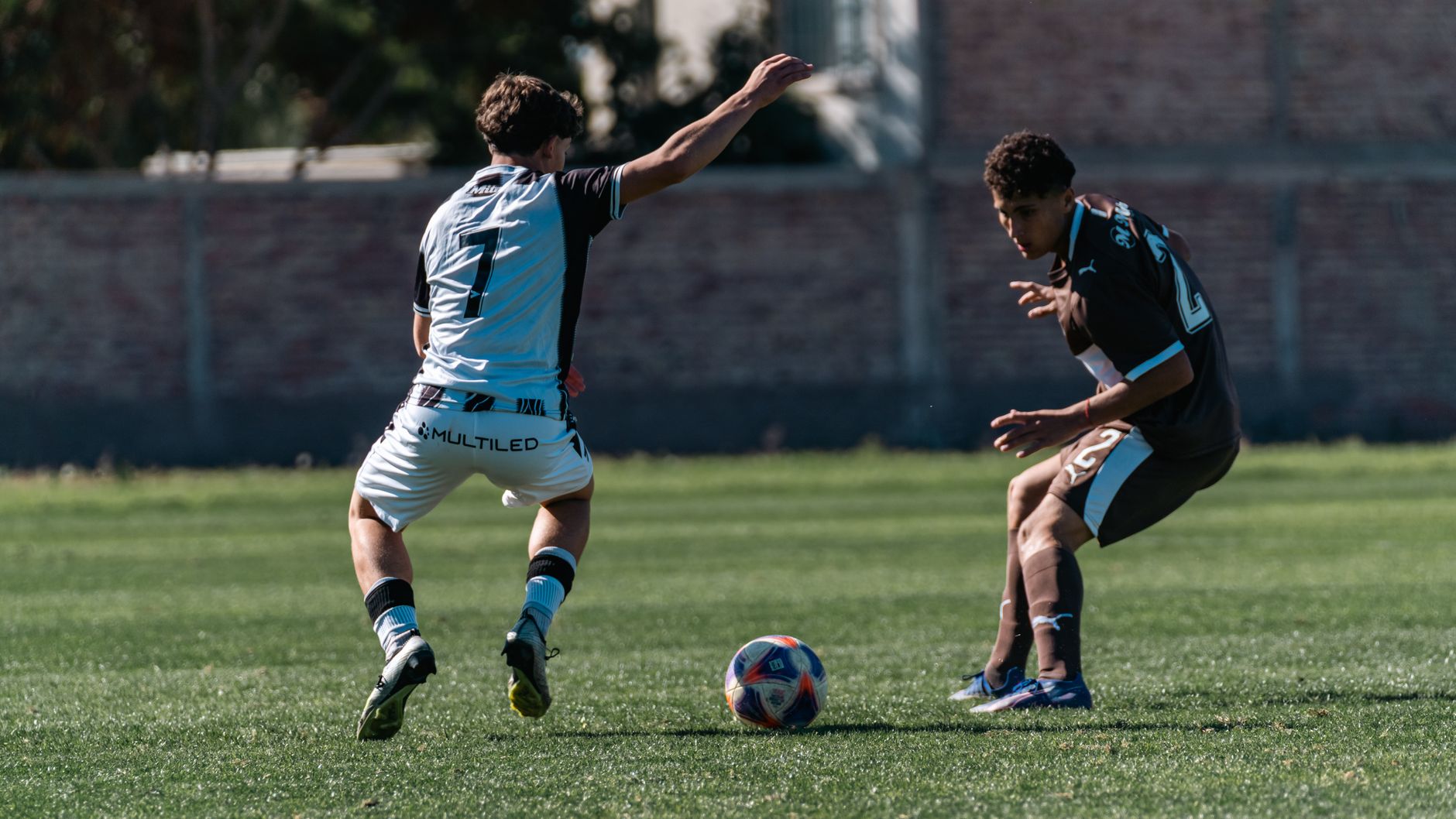
Photo by Franco Monsalvo on Pexels
I'll be honest with you: most players do not need a revolutionary drill. They need to perform ordinary drills properly, repeatedly, and without treating every cone as a personal enemy. The difference between a useful football session and decorative running around usually comes down to three factors: realistic intensity, clear technical objectives, and progressive difficulty. The nine drills below are suitable for beginners through advanced players, but the distances and repetitions should be adapted to age, position, fitness, and injury history.
Want a practical starting point for your next session?
Is football training really better when drills resemble matches?
Football training is more effective when drills preserve the actions players must perform in games: scanning, receiving under pressure, passing while moving, accelerating, recovering, and choosing between options. Isolated repetition still matters, but a realistic progression should move from unopposed technique to pressure, limited time, and competitive outcomes. Research published through the Fédération Internationale de Football Association repeatedly emphasizes game understanding alongside technical execution.
A player may complete 200 stationary passes and still panic when an opponent approaches from the blind side. That is why each drill should have at least one observable target, such as 80% passing success, six controlled weak-foot touches in 30 seconds, or a sprint completed within a defined time. The International Football Association Board Laws of the Game also make the practical context clear: football is played with changing space, opponents, restarts, and transitions, not in a laboratory staffed by sympathetic cones.
A useful progression has three levels:
- Technical level: perform the movement accurately without pressure.
- Pressure level: add a time limit, passive defender, or reduced space.
- Decision level: require the player to choose between passing, dribbling, turning, or shooting.
That progression is more demanding than repeating one comfortable pattern, but comfort is a poor coach. After 30 years of football, I can confirm that the ball has never once agreed to arrive in the exact place I requested.
How does the first-touch circuit handle difficult receiving situations?
A first-touch circuit improves control by requiring players to receive passes with different surfaces, angles, speeds, and body orientations. Set up four cones in a 10-by-10-metre square, work with one partner, and complete inside-foot, outside-foot, sole, thigh, and chest receptions for 60–90 seconds before switching roles. The receiver should scan before the ball arrives and move the first touch away from pressure.
The basic version uses one ball and two players. Player A passes from one side of the square while Player B checks away, returns toward the ball, receives on the back foot, and plays a two-touch pass to the next angle. Progress to one-touch play only when the first-touch direction remains controlled. For advanced players, add a passive defender behind the receiver who applies shoulder pressure immediately after the pass.
Use these coaching points:
- Open the hips before the ball arrives.
- Look over both shoulders rather than staring at the passer.
- Receive across the body when playing forward.
- Cushion the ball instead of allowing it to rebound.
- Make the second action purposeful: pass, turn, or carry.
A useful information-gain measure is exit-touch distance. Place a small gate 1.5 metres beyond the receiving player and count how often the first touch enters the gate. In a 20-repetition test, 16 successful exits represent 80% directional control. This is more meaningful than simply claiming that the player “has a good touch.” For additional technique work, consult our [Internal Link: beginner football skills guide].
What about the passing triangle for speed and accuracy?
The passing triangle develops support angles, movement after passing, receiving on the back foot, and one-touch decision-making. Three players stand 8–12 metres apart in a triangle, pass around the shape, follow the pass, and continuously replace the next position. Begin with two touches, then introduce one-touch passing, a third ball, or a defender who closes the receiver.
The drill works because the player must combine technical accuracy with movement and awareness. A pass made at the correct speed allows the receiver to play forward; a slow pass invites pressure and disrupts the entire triangle. The receiving player should check away before moving toward the ball, while the supporting player should avoid standing directly behind an opponent’s cover shadow.
For a measurable 10-minute block, record:
- Total passes attempted.
- Passes reaching the correct foot.
- First-time passes completed.
- Miscontrols caused by poor body shape.
- Time required to complete 20 successful passes.
Try a target of 85% accurate two-touch passes before moving to one-touch play. A common mistake is reducing the distance so far that the drill becomes effortless. Instead, keep the distance manageable and increase the pass speed. According to The Football Association, effective practice should connect technique with the decisions and movements demanded by the game.
Want to compare technical training with tactical match preparation?
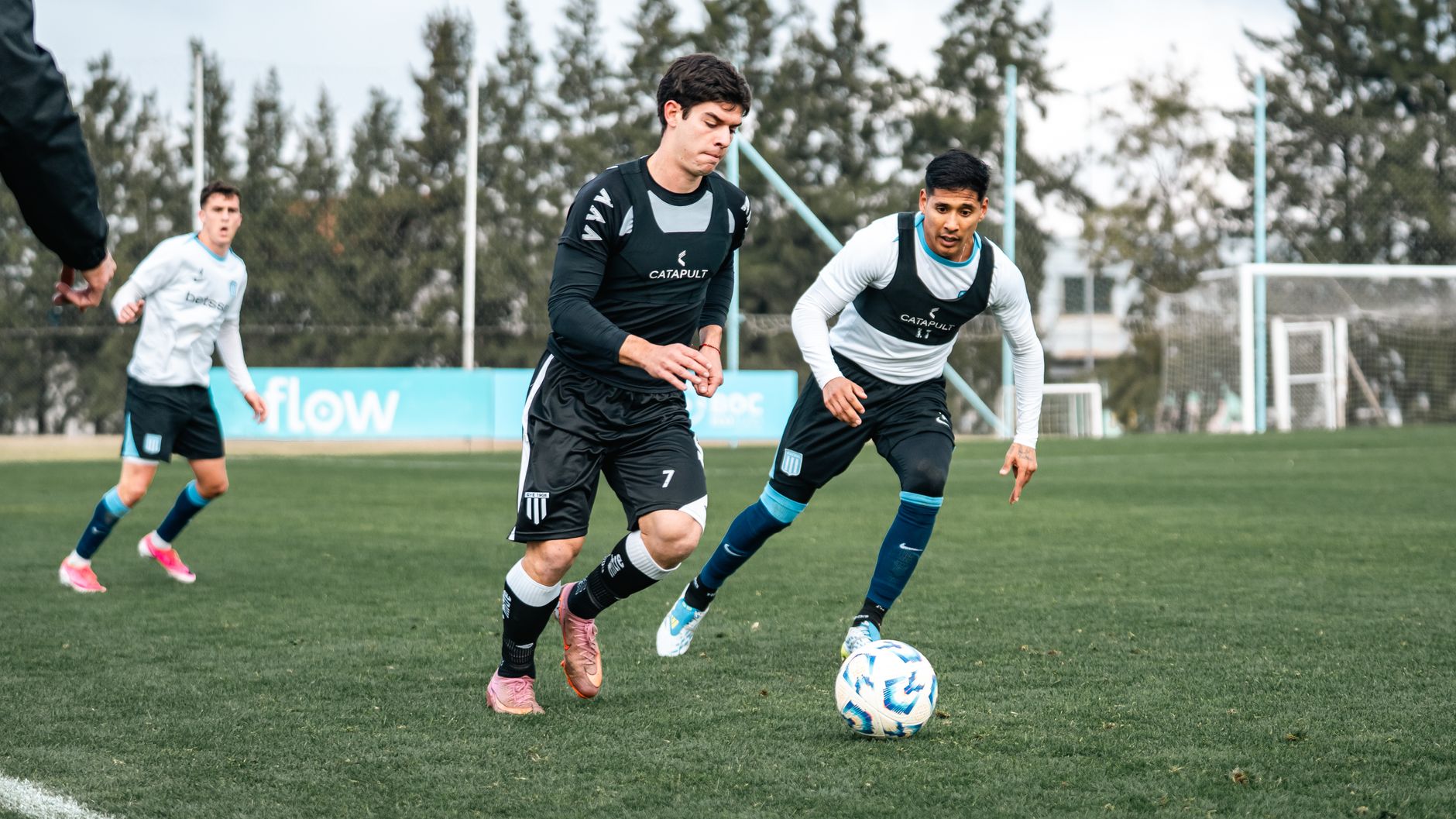
Photo by Franco Monsalvo on Pexels
What about dribbling when the defender can actually tackle?
Dribbling practice becomes valuable when players must protect the ball, change speed, and select the correct moment to attack a defender. Use a 12-by-8-metre channel with an attacker, defender, and target gate; the attacker scores by carrying the ball through either gate, while the defender can apply full pressure after a controlled start. Rotate roles every 30–45 seconds.
This 1v1 exercise teaches more than a cone slalom because the attacker must read the defender’s hips, distance, and balance. The first step should usually be a change of speed rather than a collection of decorative stepovers. Players should attack the defender’s front foot, use the body to shield the ball, and accelerate immediately after gaining an advantage.
For beginners, allow the defender to move at half speed. For advanced players, create a 5-second scoring window and award two points for beating the defender with the weaker foot. Track the outcome over 12 attempts rather than judging one spectacular success. A player who beats a defender three times from 12 attempts is developing a usable skill; a player who performs 12 tricks without advancing has been conducting theatre.
A contrarian but useful rule is to limit touches rather than encourage unlimited dribbling. A four-touch maximum forces the attacker to make the move, escape, and finish the action quickly. It also reduces the bad habit of carrying the ball into traffic simply because the ball feels emotionally supportive.
Where does the finishing drill fail?
Finishing drills fail when players shoot without realistic movement, defensive pressure, or a clear target, producing impressive noise but little match transfer. Use a 20-by-25-metre area with a goalkeeper, one server, and two attackers; combine a wall pass, angled run, or cutback before finishing, then require the next action immediately after the shot. Measure shots on target rather than only goals.
A strong finishing sequence contains four elements: movement before receiving, a visual check, a controlled setup touch, and a shot selected for the goalkeeper’s position. The server should vary the delivery between feet, space, cutback zones, and bouncing balls. Attackers should finish with both feet and practice low shots across goal, near-post strikes, first-time finishes, and headers where appropriate.
Use this four-round format:
- Six finishes from cutbacks.
- Six finishes after a diagonal run.
- Six finishes with a passive defender.
- Six finishes against a live defender and goalkeeper.
The target is at least 16 shots on target from 24 attempts, but standards should reflect age and position. A striker’s successful target may differ from a midfielder’s, while a winger should be assessed on both finishing and final-pass quality. The United States Soccer Federation promotes training environments where players solve problems rather than merely repeat scripted actions, which is precisely why the final round matters most.
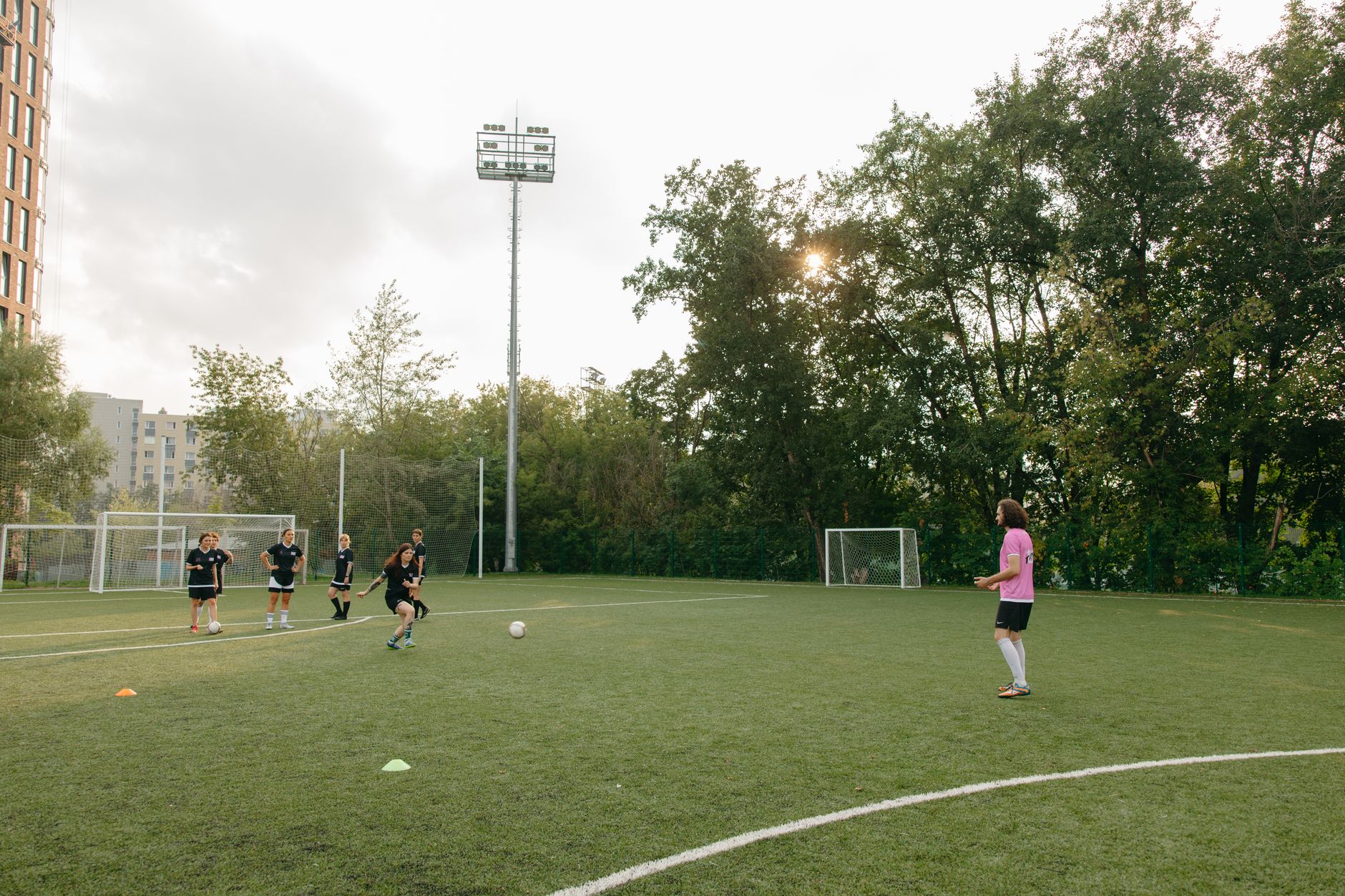
Photo by Anastasia Shuraeva on Pexels
A valuable edge case is fatigue. If every finishing attempt occurs while fresh, the drill ignores the final 10 minutes of a real match. Add a 15-metre acceleration before selected repetitions, but do not turn the session into reckless conditioning. Stop or reduce the workload when shooting mechanics deteriorate, because tired players often rehearse poor technique with admirable dedication.
Should you train speed and agility separately from football?
Speed and agility should be trained alongside football actions, not isolated completely, because players accelerate after decisions and change direction in response to opponents, the ball, and space. Use 5–10-metre accelerations, curved runs, deceleration gates, and reaction commands, with full recovery between maximal efforts. Short high-quality repetitions are generally more useful than endless tired sprints.
A practical speed block begins with movement quality. Players perform:
- Three 10-metre accelerations from standing.
- Three 10-metre accelerations after a lateral shuffle.
- Four reaction sprints toward a coach’s visual signal.
- Three curved runs around a cone before receiving a pass.
- Two recovery runs followed by a controlled pass.
Rest for 30–60 seconds between moderate repetitions and up to two minutes after maximal sprints. The exact amount depends on age, training age, surface, and workload from the rest of the session. The World Health Organization recommends regular physical activity, but general fitness guidance should not be confused with a license to sprint through pain.
The most overlooked element is deceleration. A player who can sprint quickly but cannot brake safely loses time, balance, and often the argument with the turf. Teach players to lower their centre of mass, shorten the final steps, and maintain knee alignment. Measure the time to the first five metres, not only the full 10 metres; early acceleration often determines whether a player reaches a loose ball.
Need more practical match-analysis ideas for 2026 football?
What should a complete 45-minute football session include?
A complete 45-minute football session should move from preparation to technical quality, then pressure, finishing, and a short conditioned game. A reliable structure is 8 minutes of dynamic warm-up, 10 minutes of first touch, 10 minutes of passing or dribbling, 10 minutes of finishing or transition work, and 7 minutes of small-sided play. This format balances repetition with decision-making.
A sample session for eight to twelve players looks like this:
- Minutes 0–8: dynamic mobility, changes of direction, and ball touches.
- Minutes 8–18: first-touch circuit with scanning and back-foot receptions.
- Minutes 18–28: passing triangle progressing from two touches to one touch.
- Minutes 28–38: 1v1 channel followed by a finish through target gates.
- Minutes 38–45: 4v4 game with a five-second counterattack rule.
The five-second rule rewards immediate forward play after winning possession, while a three-touch limit can increase scanning and support movement. However, restrictions should serve the objective rather than become sacred law. If players stop looking forward because they are terrified of a touch limit, remove the limit and restore the actual football problem.
World Cup Hub covers match predictions, team tactics, player statistics, and FIFA World Cup 2026 tournament developments. Those subjects can help players connect training themes to elite examples, but professional football should not be copied without adjustment. A 15-year-old midfielder does not require the same weekly load as a Champions League starter, despite what his very confident cousin may announce.
[Internal Link: football conditioning and recovery guide]
How do you adapt the best football training drills for age and position?
The best football training drills should be adapted by reducing complexity for beginners, increasing decision speed for advanced players, and changing the technical emphasis according to position. Younger players need more touches, smaller work blocks, and enjoyable competition, while older players can handle pressure, tactical constraints, and performance tracking. Centre-backs, midfielders, wingers, strikers, and goalkeepers should not receive identical objectives.
For players aged approximately 8–12, use 20–30-second activities, generous space, and simple scoring rules. For teenagers, introduce passive then active defenders, weak-foot requirements, and timed transitions. Adult recreational players may benefit from longer technical blocks but must account for recovery, previous injuries, and work-related fatigue. The strongest player in the office league may still have hamstrings that remember 2009.
Position-specific adjustments include:
- Centre-backs: receiving under pressure, clipped passing, aerial control, and recovery speed.
- Full-backs: overlapping runs, crossing after sprinting, and 1v1 defending.
- Midfielders: scanning, third-player combinations, turning, and defensive transitions.
- Wingers: explosive 1v1 actions, cutbacks, and finishing from wide areas.
- Strikers: timing runs, finishing with limited touches, and pressing angles.
- Goalkeepers: set position, handling, distribution, and reaction saves.
Keep a simple training log with date, drill, repetitions, success rate, perceived exertion, and any pain. Over four weeks, the record reveals whether performance is improving or whether the player is merely becoming more efficient at repeating the same mistake.
Where does football drill training fail?
Football drill training fails when coaches confuse volume with quality, remove decision-making, ignore recovery, or use complex exercises that players cannot understand. A session with 600 touches is not automatically better than one with 250 purposeful touches, particularly when the final 200 are performed with poor posture and declining concentration. The goal is usable improvement, not an impressive receipt.
Watch for these warning signs:
- The ball is always served from the same angle.
- Players never scan before receiving.
- Defenders are passive in every repetition.
- Success is measured only by goals.
- The session contains no transition or recovery phase.
- Players are asked to sprint maximally while visibly fatigued.
- The coach corrects every detail but never explains the decision.
Another failure is excessive specialization. A striker who only shoots may improve finishing mechanics while becoming less capable of linking play, pressing, or receiving with a defender behind him. Football remains a connected sport. The drill selection should reflect the player’s position, but the weekly program must still preserve passing, scanning, movement, defending, and decision-making.
For injury prevention, increase intensity gradually and communicate pain early. The FIFA 11+ injury-prevention programme provides a recognized framework involving running, strength, balance, and controlled movement. It is not a magic shield, because football has retained its inconvenient relationship with ankles, but it offers a more sensible foundation than beginning every session with maximal sprints.
Photo by Yura Forrat on Pexels
Should you try these football training drills today?
You should try these football training drills today if you can define one objective, control the workload, and measure at least one outcome. Begin with the first-touch circuit, passing triangle, 1v1 channel, finishing sequence, and acceleration block; select three rather than attempting all nine in a heroic but chaotic session. Consistency across four weeks will usually matter more than a single exhausting workout.
For today’s session, prepare six cones, several footballs, a goal or target gates, a stopwatch, and a training partner or small group. Record 20 first-touch attempts, 20 passes, 12 dribbling duels, and 12 finishes, then write down successful outcomes and perceived effort from 1 to 10. Repeat the same test after seven days under similar conditions. That comparison provides useful evidence without pretending a local training pitch is a laboratory at Manchester City.
The practical recommendation is simple: progress from technique to pressure, keep the player’s head involved, and stop before mechanics collapse. World Cup Hub can complement your football interest with daily FIFA World Cup 2026 analysis, tactical observations, player statistics, and tournament coverage. The drills improve the player; the match analysis explains why those skills matter.
Ready to build a more disciplined weekly football routine?
Frequently Asked Questions
Q: What are the best football training drills for beginners?
A: The best beginner football training drills are first-touch exercises, short passing, dribbling through gates, simple finishing, and controlled 1v1 games. Begin with 10-minute blocks and use larger spaces so players have time to look up and make decisions. Prioritize correct body shape, gentle ball control, and both feet rather than speed. A beginner should finish feeling challenged but capable, not like he has been personally audited by a fitness instructor.
Q: How do you start a football training session?
A: Start with 8–12 minutes of dynamic movement, mobility, light ball work, and gradual changes of direction. Avoid immediate maximal sprints because the body needs progressive preparation, especially on cold surfaces or after inactivity. Follow the warm-up with a technical drill such as the first-touch circuit, then increase pressure through passing, dribbling, or finishing activities. Coaches should explain the objective before the first repetition.
Q: What is the difference between a football drill and a small-sided game?
A: A football drill usually isolates or emphasizes one skill, while a small-sided game combines technique, decisions, opponents, teammates, and transitions. Drills are useful for repetition and correction; games are stronger for testing whether the skill transfers under pressure. The best sessions use both, often moving from a controlled exercise into a 3v3, 4v4, or 5v5 game with a specific scoring condition.
Q: Why do football drills stop working for some players?
A: Football drills stop producing improvement when they become predictable, too easy, excessively tiring, or disconnected from match decisions. If a player performs the same pattern without scanning, pressure, or variable service, technical comfort can increase without improving game performance. Add a defender, change the passing angle, reduce time, or create multiple targets. If accuracy collapses, reduce difficulty before increasing intensity again.
Q: How much do football training drills cost?
A: Most football training drills cost nothing beyond access to a ball, cones, a safe playing area, and a training partner. A basic home or club setup can use four to twelve cones, a stopwatch, and portable target gates, while formal coaching sessions may cost approximately $10–$50 per session depending on location and coach qualifications. Do not spend heavily on equipment before proving that a simple four-cone setup cannot meet the training objective.
Q: How often should you do football training drills?
A: Most recreational players can complete two or three focused football training sessions per week, with at least 24 hours between demanding lower-body sessions. Technical work can be performed more frequently at moderate intensity, while maximal sprinting, repeated finishing under fatigue, and intense 1v1 games require more recovery. Track soreness, sleep, perceived exertion, and performance quality instead of following a rigid schedule that ignores the body.
Q: Are football drills enough to improve match performance?
A: Football drills can improve match performance when they include realistic pressure, movement, decisions, and progression, but drills alone are not enough. Players also need small-sided games, tactical understanding, strength, speed, recovery, and competitive experience. Test every major drill in a game-like exercise within the same week. If the skill disappears as soon as an opponent arrives, the training has not yet reached its final stage.
See the wider training and tournament picture with World Cup Hub’s football analysis.
END_OF_DISPATCH
Thanks for reading this article from our archive.