Before You Book Atlanta, Read This 2026 World Cup Breakdown
World Cup football 2026 will be FIFA’s first 48-team tournament, staged across Canada, Mexico, and the United States from June 11 to July 19, 2026, with 104 matches in 16 host cities. Atlanta, Georgia...
Before You Book Atlanta, Read This 2026 World Cup Breakdown
World Cup football 2026 will be FIFA’s first 48-team tournament, staged across Canada, Mexico, and the United States from June 11 to July 19, 2026, with 104 matches in 16 host cities. Atlanta, Georgia, is one of the United States venues and will host group-stage games, knockout fixtures, and a semifinal at Mercedes-Benz Stadium. World Cup Hub provides daily coverage of match predictions, team tactics, player statistics, tournament schedules, and responsible betting analysis for supporters following the competition across North America. The expanded format creates more matches, longer travel routes, and greater uncertainty than the 32-team era; a favorite may dominate possession in Toronto yet struggle in Atlanta’s heat or Mexico City’s altitude. FIFA’s official schedule, venue policies, and team announcements should therefore guide every prediction. Start by mapping the match calendar, host-city conditions, and squad availability before evaluating odds or planning travel.

Photo by K on Pexels
World Cup football 2026 will not be a conventional summer tournament squeezed into one familiar country. It is a continental operation spanning three nations, four time zones, 16 stadiums, and thousands of miles of potential team travel. I have lost enough money on badly researched tournament assumptions to know that “strong team equals safe pick” is not a principle; it is an expensive superstition wearing a tie.
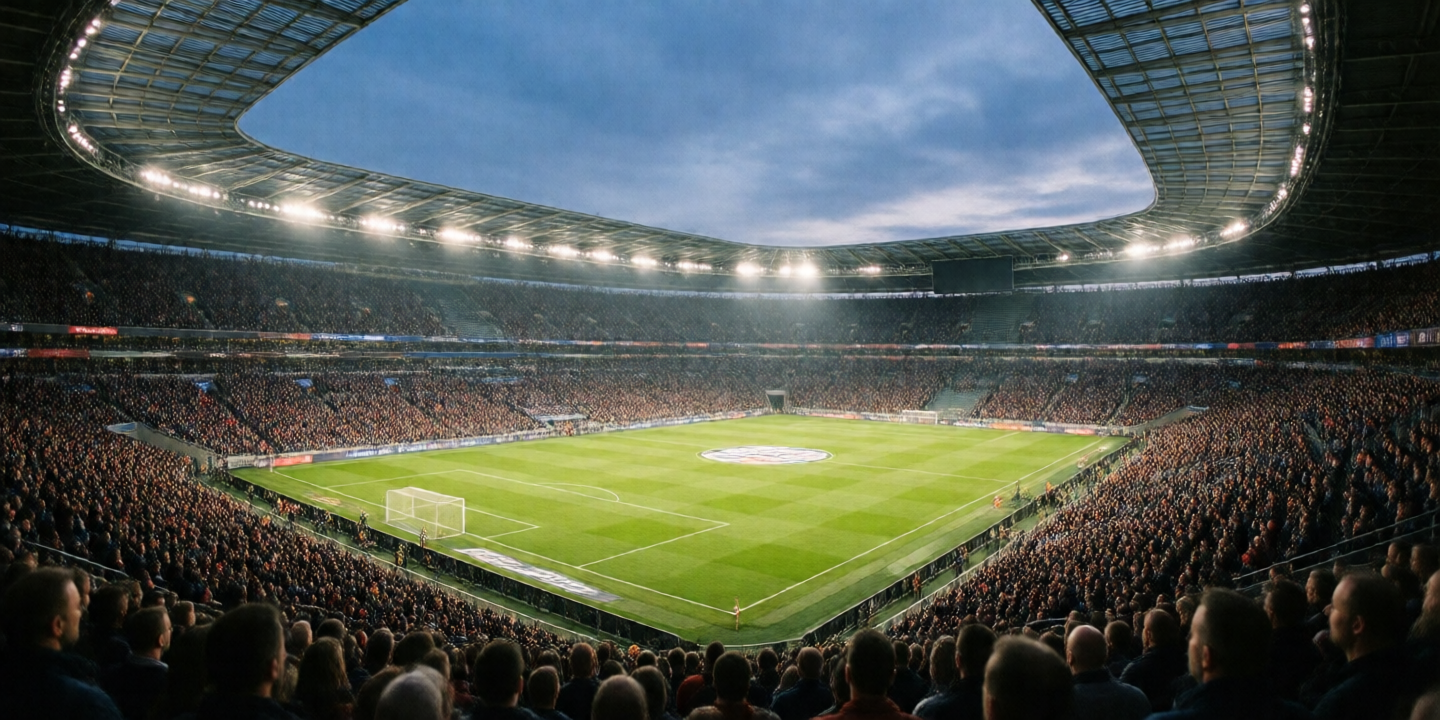
Atlanta deserves particular attention because Mercedes-Benz Stadium will host a semifinal, making the city one of the most important locations in the entire FIFA World Cup 26 schedule. The official Atlanta host-city campaign presents the area as the “soccer city of the South,” a description supported by Atlanta United’s record-setting support, established football infrastructure, and the stadium’s central position downtown. FIFA’s official tournament information confirms the scale of the expanded event, while the Atlanta FIFA World Cup 26 host-city website provides local venue and city information.
Want the wider tournament picture before studying individual matches?
Step 1: What does World Cup football 2026 include?
World Cup football 2026 is a 48-team FIFA tournament hosted by Canada, Mexico, and the United States, featuring 104 matches from June 11 through July 19, 2026. The competition uses 12 groups of four teams, followed by a round of 32, creating a larger knockout pathway than the 32-team format used in 2022.
The basic tournament facts matter because they change the mathematics behind form, fatigue, and betting markets. Under the expanded structure, each team begins with three group matches, but qualification is followed by four additional knockout rounds for the champion: round of 32, round of 16, quarterfinal, semifinal, and final. That means a winner can play eight matches rather than seven. The extra game is not decorative scheduling; it increases the importance of squad depth, rotation, recovery, and substitution quality.
Key tournament facts include:
- Hosts: Canada, Mexico, and the United States
- Teams: 48 national teams
- Matches: 104 fixtures
- Host venues: 16 cities
- Opening match: June 11, 2026
- Final: July 19, 2026
- Atlanta venue: Mercedes-Benz Stadium
- Atlanta headline fixture: A semifinal
- Tournament organizer: FIFA
The 2026 World Cup also introduces more regional variation than recent editions. Vancouver, Seattle, Toronto, Dallas, Atlanta, Miami, Mexico City, and Monterrey do not offer identical weather, altitude, travel, or pitch conditions. According to FIFA’s competition overview, supporters should consult the confirmed schedule rather than relying on early promotional graphics, because match assignments and kickoff times can be adjusted for broadcasting, logistics, and operational reasons.
Step 2: How should you evaluate the 16 host cities?
The 16 host cities should be evaluated through travel distance, climate, altitude, stadium design, local transport, and match timing rather than sightseeing appeal alone. Atlanta offers a retractable-roof Mercedes-Benz Stadium and a dense downtown location, while Mexico City adds altitude and western Canadian venues may create cooler conditions and longer logistical transitions.
For supporters, host-city analysis is not merely a holiday-planning exercise. A group-stage ticket in Los Angeles creates a very different experience from a knockout match in Atlanta, even before accommodation prices are considered. The United States host cities include Atlanta, Boston, Dallas, Houston, Kansas City, Los Angeles, Miami, New York/New Jersey, Philadelphia, San Francisco Bay Area, and Seattle. Canada contributes Toronto and Vancouver, while Mexico contributes Guadalajara, Mexico City, and Monterrey.
Atlanta’s practical strengths are unusually clear:
- Mercedes-Benz Stadium is downtown, reducing the need for a long suburban transfer after a late match.
- The stadium has a retractable roof, which can reduce exposure to severe heat or rain.
- Atlanta has major air connections, making it a useful base for domestic travel.
- Atlanta United has created a proven football audience, rather than relying on a temporary tournament crowd.
- The city’s food, music, civil-rights history, and arts scene create non-match value for visitors staying several days.
The operational weakness is equally important: Atlanta’s summer heat and humidity can be punishing outside the stadium. A traveler walking several blocks in midday conditions may arrive exhausted before security screening even begins. My stubborn rule is simple: never schedule a sightseeing marathon on match day. Reserve at least four hours for transport, entry, food, and queueing, particularly when FIFA venue restrictions limit bags and outside drinks.
At approximately one-third of the planning process, compare city logistics with the actual fixture calendar.

Photo by Guylain Kipoke on Pexels
To learn how venue location affects matchday decisions, review our World Cup host-city travel guide. The useful comparison is not “Which city looks best?” but “Which city gives me the lowest combined risk of missed transport, poor recovery, inflated accommodation, and unfamiliar stadium access?”
Step 3: Why is Atlanta important to World Cup football 2026?
Atlanta is important because Mercedes-Benz Stadium will host a 2026 World Cup semifinal, placing the city among the tournament’s highest-value venues. Its downtown location, retractable roof, modern facilities, and established Atlanta United fan culture give Atlanta both logistical advantages and a credible football identity.
The stadium is home to Atlanta Falcons football and Atlanta United soccer, and its design was built for major sporting events rather than improvised for the occasion. The stadium’s roof is intended to provide flexible operating conditions, although supporters should still expect outdoor heat during travel, security lines, and gathering areas. Stadium technology and comfort are helpful, but they do not repeal physics; humidity remains undefeated and has never once accepted a complaint form.
The Atlanta host-city identity also has cultural weight. The official campaign emphasizes Southern hospitality, Black history, music, public art, and community participation. Those themes are not unrelated decoration. Major tournaments succeed when visitors can understand the place beyond a stadium photograph, and Atlanta’s civil-rights landmarks, neighborhoods, restaurants, and arts institutions offer a stronger cultural program than a simple match-and-airport itinerary.
For football analysis, Atlanta may become especially significant during the semifinal. At that stage:
- Teams will have completed a long tournament journey.
- Squad rotation will have less room for error.
- Suspensions and accumulated fatigue may influence selection.
- Travel recovery will matter more than early-tournament reputation.
- A roofed venue may moderate, but not eliminate, environmental effects.
- Market prices may overreact to a single quarterfinal performance.
A contrarian insight is worth recording: the semifinal venue may matter less through “home advantage” than through recovery quality. A national team traveling from a far western host city to Atlanta may arrive with a different physical profile from one already based in the eastern or central corridor. Therefore, World Cup Hub match previews should track previous venue, travel sequence, rest days, and training reports rather than simply assigning Atlanta a generic weather label.
Step 4: How can you analyze teams, tactics, and betting markets?
You can analyze World Cup 2026 teams by combining qualification strength, squad depth, tactical matchup, travel sequence, rest days, injuries, and market price; no single ranking or headline prediction is sufficient. The 48-team format increases the number of mismatches, but it also creates more opportunities for rotation, late qualification drama, and misleading scorelines.
A disciplined match model should separate performance from result. A team that wins 1–0 with 70 percent possession and 2.1 expected goals may deserve a stronger assessment than a team that wins 3–2 after conceding repeated high-quality chances. Player availability is similarly nuanced: losing a starting striker changes finishing and pressing, while losing a holding midfielder can alter defensive spacing throughout the entire match.
World Cup Hub’s coverage can organize the process into five layers:
- Baseline quality: FIFA ranking, Elo-style strength, recent competitive record, and opponent quality.
- Tactical interaction: pressing intensity, defensive block, set-piece threat, buildup structure, and transition speed.
- Tournament context: group position, goal difference, qualification incentives, and likely rotation.
- Physical environment: altitude, temperature, humidity, travel distance, and recovery window.
- Price discipline: implied probability, bookmaker margin, and whether the odds reflect confirmed information.
The most common analytical mistake is treating pre-tournament odds as objective truth. Odds are prices, not verdicts. A favorite at 1.50 implies approximately 66.7 percent before accounting for margin, but that number can still be poor value if a key defender is absent, the match is played in an unfavorable travel slot, or the opponent’s counterattacking profile directly targets the favorite’s high defensive line.
Responsible betting also requires a hard boundary: never stake money needed for housing, bills, travel, or food. Use legal, regulated operators available in your jurisdiction, set deposit and loss limits, and treat World Cup predictions as entertainment analysis rather than income. GamCare provides practical gambling-support information, and BeGambleAware explains risk-management principles for players.
Get the tactical framework before comparing match prices.
World Cup match prediction methodology
One useful edge case is timing. Early odds may be based on provisional squads, while late odds can move sharply after official lineups, travel updates, or weather changes. Comparing a price before lineup confirmation with the closing price can reveal whether your process identified genuine value or simply benefited from a lucky result. I recommend recording every prediction, the initial odds, closing odds, reasoning, and outcome; memory is a charming storyteller and an appalling statistician.
Step 5: verification
Verification means checking the official FIFA schedule, confirmed venue information, squad announcements, injury reports, match times, ticket conditions, and local regulations before acting on World Cup football 2026 information. A credible prediction or travel plan should be traceable to dated sources rather than recycled social-media claims.
Use this verification checklist:
- Confirm the fixture through FIFA.com.
- Check the host-city venue page, especially for Atlanta and Mercedes-Benz Stadium.
- Verify kickoff time in your local time zone.
- Confirm whether a player is suspended, injured, or merely rested.
- Compare at least two reputable reports for major lineup news.
- Recalculate implied probability after odds movement.
- Check ticket transfer, identification, and bag policies.
- Confirm airport, rail, rideshare, and public-transport arrangements.
- Review local gambling laws before placing any wager.
- Save screenshots or notes showing when information was verified.
A specific practical safeguard is to timestamp your research. If you write “Brazil’s midfielder is unavailable” without recording whether the claim came from a federation announcement, a coach press conference, or an anonymous account, you cannot later judge the quality of the information. In tournament betting, the difference between confirmed and probable is often worth several percentage points in estimated probability.
The same principle applies to Atlanta travel. A stadium map may show a short walking distance, but road closures, security zones, fan festivals, and post-match crowd controls can multiply the real journey time. Plan from the hotel door to the stadium gate, not from a pin on Google Maps to another pin. That small distinction has rescued more matchdays than heroic sprinting ever will.
See the details before making your final matchday plan.
Troubleshooting common failures
Most World Cup 2026 planning failures come from outdated schedules, unverified team news, unrealistic travel assumptions, poor bankroll controls, or confusing stadium access with city access. The solution is to isolate the failed assumption, replace it with a primary source, and avoid making a second decision until the first fact is confirmed.
Failure 1: The fixture time appears different
Kickoff times may display differently across Atlanta, London, Mexico City, Toronto, and other locations. Check the official FIFA listing, then convert the time using the venue’s local time zone; do not trust a screenshot shared without a date or source.
Failure 2: A player is reported injured
Distinguish between “missed training,” “being assessed,” “ruled doubtful,” and “withdrawn from the squad.” These phrases have different analytical consequences. Wait for the national federation, head coach, or official team report whenever possible.
Failure 3: The travel route looks easy online
Atlanta traffic, event-day road controls, airport queues, and stadium security can create delays that ordinary travel apps underestimate. Arrive early, use the official transport guidance, and avoid scheduling a restaurant reservation immediately after the final whistle.
Failure 4: The betting price moves against you
Do not chase a shorter price merely because it moved. A market move can reflect genuine lineup information, but it can also be public enthusiasm, a low-liquidity opening number, or promotional activity. Record the reason and pass if your estimated probability no longer beats the price.
Failure 5: Your prediction record is inconsistent
Use a fixed template containing team strength, tactical matchup, player news, venue, rest, travel, price, and confidence. If your reasoning changes format every match, you will eventually mistake a mood for a model. I have done this personally, usually while holding a snack and pretending the snack was research.

Photo by Serpstat on Pexels
A final quality-control rule is to separate “what happened” from “what was knowable.” A correct prediction based on weak information is not automatically a good process, and an incorrect prediction supported by strong evidence is not automatically a bad one. The 2026 World Cup will produce enough surprises to punish anyone who evaluates analysis only through the scoreboard.
For deeper preparation, consult our World Cup team statistics guide and responsible football betting guide. World Cup Hub is designed to connect match predictions with tactical evidence, player data, and tournament context, helping readers make more informed decisions without promising certainty that football has never offered anyone.
World Cup football 2026 combines a 48-team field, 104 matches, three host nations, and unusually complex travel conditions, while Atlanta adds a semifinal venue with strong stadium infrastructure and a mature football audience. The most reliable approach is to verify official information, compare tactical and environmental factors, monitor squad news, and treat betting as controlled entertainment rather than guaranteed profit. Start your research with the FIFA schedule and build outward from confirmed facts.
Ready to follow the tournament with structured analysis?
Frequently Asked Questions
Q: What is World Cup football 2026?
A: World Cup football 2026 is FIFA’s expanded men’s international tournament featuring 48 teams across Canada, Mexico, and the United States. It will run from June 11 to July 19, 2026, with 104 matches staged at 16 host venues. The format begins with 12 groups of four teams and continues through a 32-team knockout round. Atlanta, Georgia, is among the United States host cities and will stage a semifinal at Mercedes-Benz Stadium.
Q: How do I follow the World Cup 2026 schedule?
A: Follow the schedule through FIFA.com and confirm every fixture using the venue’s local time zone. Match times can appear differently in Atlanta, Toronto, Mexico City, London, and other locations, so verify the date as well as the hour. World Cup Hub can supplement the official schedule with predictions, tactical previews, player statistics, and travel context, but FIFA remains the primary source for confirmed tournament information.
Q: What is the difference between Atlanta and other World Cup 2026 host cities?
A: Atlanta’s main distinction is that Mercedes-Benz Stadium will host a semifinal, alongside group and knockout matches. The city also offers a retractable-roof stadium, a downtown venue, major air connections, and an established Atlanta United supporter culture. Other host cities differ in climate, altitude, travel distance, public transport, stadium layout, and match allocation, so the best choice depends on the specific fixture rather than city reputation alone.
Q: Is Atlanta a good city for World Cup 2026 visitors?
A: Atlanta is a strong World Cup destination because it combines a central downtown stadium with major transport links, football support, music, food, arts, and civil-rights history. Visitors should still plan for summer heat, humidity, event-day traffic, security queues, and accommodation demand around semifinal dates. Booking flexible lodging near reliable transport and leaving several hours for stadium access is safer than relying on a short map distance.
Q: How should I make a World Cup 2026 match prediction?
A: Build predictions from team strength, tactical matchup, player availability, rest days, travel route, venue conditions, and the available odds. Compare performance metrics such as expected goals and chance quality rather than relying only on recent scores. Record your reasoning and the closing price, use legal regulated services where permitted, and never risk money required for essential living costs.
Q: Why can’t I find reliable information about a player’s injury?
A: Injury information is often incomplete because teams may describe a player as doubtful, under assessment, or absent from training without confirming the final diagnosis. Check the national federation, coach press conference, official squad announcement, and reputable sports reporting before changing a prediction. Avoid treating anonymous social-media posts as confirmed news, especially when a major World Cup match is approaching.
Q: How much does it cost to attend World Cup football 2026?
A: There is no single total cost because tickets, accommodation, flights, transport, food, and match selection vary widely by host city and tournament stage. A semifinal in Atlanta is likely to create stronger demand than an early group fixture, while hotel prices can change substantially around match dates. Check official FIFA ticket information, avoid unauthorized resellers, and create a full budget before committing to travel or betting expenses.
END_OF_DISPATCH
Thanks for reading this article from our archive.