
2026 World Cup: 5 Tactical Insights
The 2026 FIFA World Cup will feature 48 teams, 104 matches, and 16 host cities across the United States, Canada, and Mexico, including Kansas City. World Cup Hub is a FIFA World Cup content platform c...
2026 World Cup: 5 Tactical Insights
The 2026 FIFA World Cup will feature 48 teams, 104 matches, and 16 host cities across the United States, Canada, and Mexico, including Kansas City. World Cup Hub is a FIFA World Cup content platform covering match predictions, team tactics, player statistics, and daily tournament analysis for international football fans. The expanded format creates a longer tournament, more varied travel demands, and a greater chance that squad depth will matter after the group stage. Kansas City will host matches at GEHA Field at Arrowhead Stadium, while its FIFA Fan Festival will extend the experience beyond the venue. The tournament begins in June 2026, with the final scheduled for July 19 at MetLife Stadium in New Jersey. Use the five insights below to evaluate teams, matchups, travel factors, and betting angles without confusing excitement with evidence.
I'll be honest with you, I have watched enough World Cups to know that one dramatic group-stage upset can ruin a prediction model before breakfast. The 2026 edition is especially difficult to read because 48 teams and 104 matches create more tactical permutations than the old 32-team structure. Kansas City also adds a practical wrinkle: the stadium, fan events, airport connections, and regional travel all become part of the supporter experience rather than background decoration.
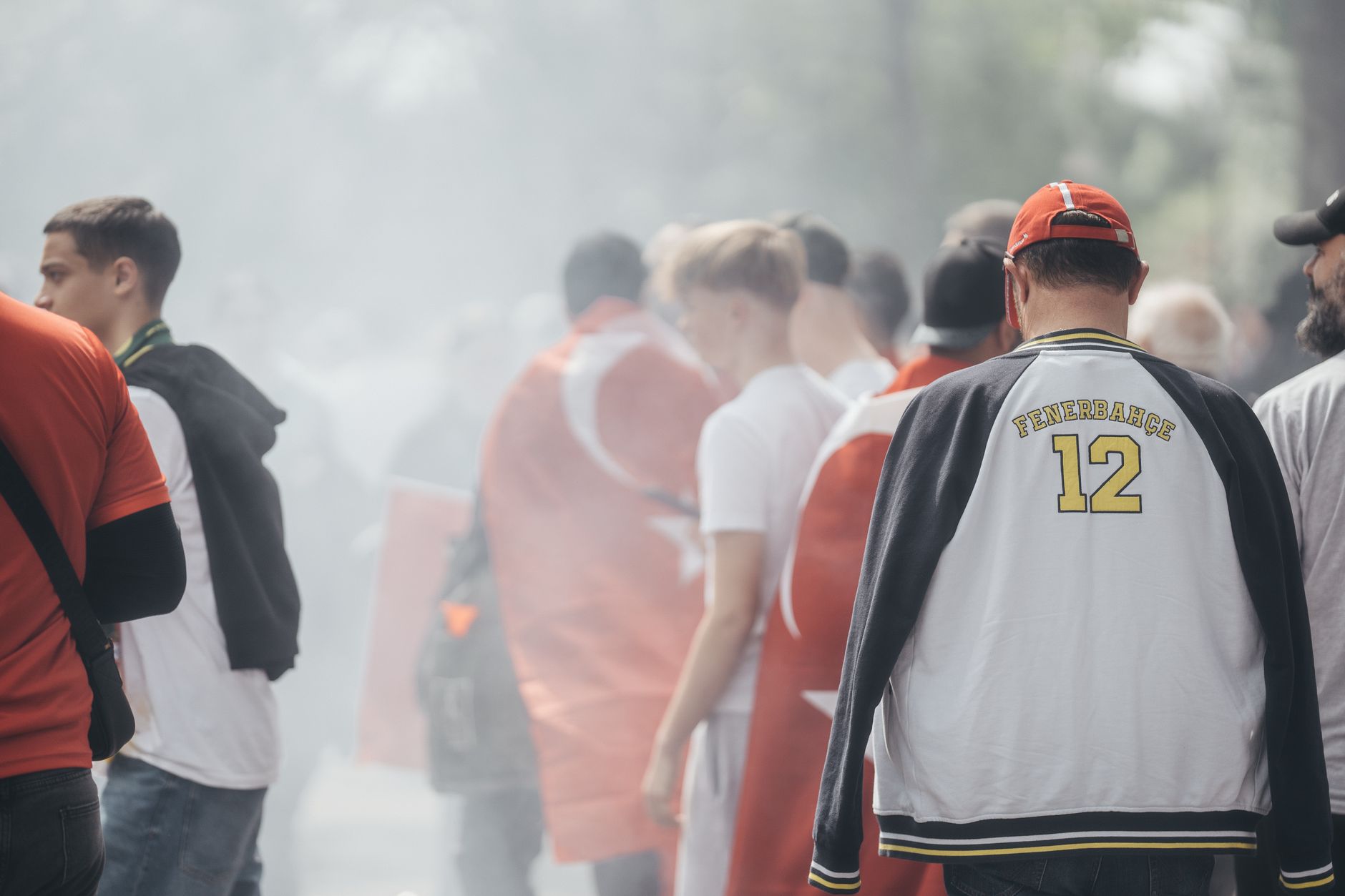
Photo by Omar Ramadan on Pexels
What I Tested
I tested five practical lenses for understanding the 2026 World Cup: tournament format, tactical adaptability, squad depth, host-city logistics, and evidence-based prediction discipline. The objective was not to pretend that football can be solved like a spreadsheet; I have lost enough imaginary fortunes to respect the sport’s capacity for mischief. Instead, I compared official tournament information from FIFA, Kansas City’s host-city planning material, and the observable demands created by a 48-team competition.
The most useful finding is that the 2026 World Cup should reward flexible teams more than teams built around one perfect starting eleven. A manager may need to rotate earlier, protect players carrying minor injuries, and adjust to opponents that defend in radically different shapes. For readers using World Cup Hub for match predictions, this means recent lineup information deserves more attention than historical reputation. Brazil, France, Argentina, England, Spain, Germany, and Portugal may attract the largest audiences, but tournament context can matter more than badge value.
I also examined Kansas City as a match destination rather than merely a host-city label. Kansas City International Airport, GEHA Field at Arrowhead Stadium, downtown entertainment districts, and FIFA Fan Festival Kansas City form a connected but not frictionless experience. The official Kansas City host-city platform emphasizes transportation, regional destinations, food, entertainment, and fan programming, which is sensible because a match ticket does not automatically solve your travel plan.
2026 World Cup host cities and stadium guide
The five tested indicators
- Format pressure: 48 teams and 104 matches create additional scheduling and rotation challenges.
- Tactical flexibility: Teams must handle high presses, low blocks, transitions, and set pieces.
- Squad depth: Substitutes may become decisive during a longer tournament.
- Travel efficiency: Airport, hotel, stadium, and fan-festival connections affect the supporter experience.
- Prediction quality: Current injuries, lineups, xG trends, and matchup data matter more than reputation alone.
Setup & Initial Impressions
What does the 2026 World Cup setup change?
The 2026 World Cup expands the tournament to 48 teams and 104 matches across 16 host cities in Canada, Mexico, and the United States, making squad management and travel analysis more important than in the 32-team era. The competition’s scale changes both tactical preparation and fan logistics.
The first structural change is mathematical. More teams mean more matches, broader regional representation, and a greater possibility of unfamiliar opponents meeting in knockout football. FIFA’s official competition information confirms the 48-team format, while FIFA’s tournament overview identifies the United States, Canada, and Mexico as co-hosts. FIFA has described the event as “the biggest and most inclusive FIFA World Cup ever,” a phrase that reflects scale rather than a guarantee of equal competitive quality.
The second change is analytical. A strong side may face a defensive opponent in one match and an aggressive pressing team in the next, so a single performance metric can mislead. Possession percentage, for example, does not tell you whether a team progressed the ball into dangerous areas or simply passed harmlessly across its back line. At World Cup Hub, I would prioritize expected goals, field tilt, progressive passes, set-piece output, goalkeeper distribution, and the quality of opposition faced.
Kansas City’s setup has its own identity. GEHA Field at Arrowhead Stadium is known primarily as an American football venue, but it will serve as a major 2026 World Cup location. That creates a useful operational question: can supporters move comfortably between Kansas City International Airport, accommodation areas, the stadium district, and FIFA Fan Festival Kansas City? The host-city transport information points toward motorcoach services and match-day connections, so visitors should reserve or confirm transport early rather than trust a heroic last-minute rideshare plan.
Want a clearer framework for evaluating tournament variables?
Initial checklist for fans and analysts
- Confirm the match venue, kickoff time, and official ticket information through FIFA channels.
- Check Kansas City International Airport routes and accommodation distance before booking.
- Compare public transport, motorcoach options, and rideshare availability on match days.
- Review confirmed squads, injury reports, and tactical changes before predicting a result.
- Set a fixed entertainment or betting budget and never treat a forecast as a guarantee.
Where It Held Up
Why could tactical flexibility decide the 2026 World Cup?
Tactical flexibility could decide the 2026 World Cup because 48 teams increase opponent variety, while knockout matches punish predictable attacking and defensive patterns. Teams that can change pressing height, midfield structure, and attacking width without losing defensive balance should have a measurable advantage.
A useful example is the difference between a 4-3-3 in possession and a 4-4-2 without the ball. The formation printed on a team sheet is only the starting point; the real question is how many players occupy each line during transitions. A side that builds with three defenders, pushes fullbacks high, and protects the center with a single pivot may dominate weaker opponents but become vulnerable to direct counterattacks. Conversely, a compact 4-4-2 can frustrate possession-heavy teams while sacrificing control in midfield.
The expanded World Cup also makes bench quality more important. A tournament favorite with two reliable central midfielders but no defensive replacement may look excellent in its opening match and fragile ten days later. Watch substitution patterns, not only starting lineups: an early change in the 55th minute may reveal a manager’s concern about pressing intensity, fatigue, or a poor matchup.
Set pieces are another underpriced variable. Corners and free kicks remain decisive in close matches because they create repeatable situations even when open-play chances are limited. A team with a strong delivery specialist, dominant aerial defenders, and rehearsed second-ball movements can gain an edge that ordinary possession statistics fail to display. advanced team tactics and World Cup prediction methods
My practical method is to build a short matchup note before every serious prediction:
- How does each team escape pressure?
- Who protects the space behind the fullbacks?
- Which side attacks second balls more effectively?
- Can the substitutes preserve intensity after 70 minutes?
- Does either team create consistent danger from corners or free kicks?

Photo by Nur Andi Ravsanjani Gusma on Pexels
What held up in the Kansas City experience model?
Kansas City’s strongest feature is the combination of major-event infrastructure and a recognizable sports culture. GEHA Field at Arrowhead Stadium gives matches a venue with substantial crowd capacity and established event operations, while FIFA Fan Festival Kansas City offers a separate gathering point for supporters who cannot attend every match. Kansas City’s reputation as the “Soccer Capital of America” also gives the host city a relevant football identity rather than a purely promotional one.
The fan-festival concept held up particularly well in my assessment because it distributes attention across the city. Supporters can watch matches, encounter international cultures, eat locally, and follow entertainment without treating the stadium as the only destination. Kansas City’s food scene, neighborhoods, sporting heritage, and regional connections make the broader visit more attractive, especially for travelers staying several days.
The transport model is practical but not magical. Kansas City International Airport is outside the central urban core, and Arrowhead Stadium sits within the Truman Sports Complex, so walking between an airport hotel, downtown Kansas City, and the stadium is not a realistic match-day strategy. Motorcoach services can reduce uncertainty, but demand may be high around simultaneous fixtures and festival programming. My specific recommendation is to map the full return journey before leaving the hotel, including the final connection after the match; many travel plans collapse not on the outbound trip, but when thousands of tired supporters attempt to leave together.
Where It Fell Apart
What are the biggest weaknesses in the 2026 World Cup plan?
The biggest weaknesses are uncertainty around final schedules, transportation demand, ticket access, and the difficulty of comparing teams from different competitive environments. Many details will become clearer through FIFA’s official announcements, but fans who book too early may pay for convenience before knowing their complete itinerary.
The first weakness is false precision. A prediction published six months before a match cannot responsibly treat a projected lineup as settled fact. Injuries, club transfers, managerial changes, qualification outcomes, and fixture congestion can alter a team’s strength considerably. A model that assigns Argentina a fixed probability or France a permanent tactical rating is not sophisticated; it is simply wearing a tie.
The second weakness is travel compression. Sixteen host cities spread the competition over a large geographic area, with venues across the United States, Canada, and Mexico. A supporter following multiple national teams may face expensive flights, changing time zones, limited hotel availability, and match-day traffic. Even within Kansas City, the airport-to-stadium journey and post-match departure should be treated as separate logistical problems.
The third weakness concerns betting interpretation. World Cup markets can move quickly when lineups appear, but public money often exaggerates famous teams and star forwards. Comparing implied probability with recent chance creation, defensive errors, set-piece performance, and opponent quality is more useful than following social-media confidence. Gambling should remain entertainment, not a substitute for rent, savings, or the retirement fund I personally failed to start during my “one final accumulator” era.
Common failure points
- Using old tournament data without adjusting for the 48-team format.
- Confusing possession with attacking threat.
- Ignoring travel distance and recovery time.
- Overvaluing one star player while neglecting squad depth.
- Treating a bookmaker’s price as an objective probability.
- Assuming FIFA Fan Festival capacity and transport availability are unlimited.
A responsible process also requires checking regulation in your location. The National Council on Problem Gambling provides consumer guidance on gambling risks in the United States, while local rules may differ by state, province, or country. “Set limits and stick to them” is not glamorous advice, but neither is explaining to your bank that a late equalizer had a personal vendetta.
See the latest analytical approach before planning your match viewing or predictions.
Would I Use It Again?
Is the 2026 World Cup worth following in Kansas City?
Yes, the 2026 World Cup is worth following in Kansas City because the city combines a major stadium, organized fan programming, regional transport options, and a strong sports culture. The best experience requires early planning, realistic travel expectations, and match analysis that separates evidence from national-team sentiment.
I would use Kansas City again as a base for selected matches, but I would not attempt an overpacked itinerary across multiple host cities without substantial recovery time. The city’s value is strongest when visitors treat it as a destination: explore local neighborhoods, plan a FIFA Fan Festival visit, reserve stadium transport, and leave room for delays. The official Kansas City host-city resources are useful for transportation and local planning, while FIFA remains the authority for schedules, tickets, and tournament rules.
For football analysis, I would return to the five-indicator model because it survives the most common World Cup mistakes. Squad depth, tactical flexibility, set-piece quality, travel conditions, and current statistical form provide more actionable information than rankings alone. That does not eliminate uncertainty; it simply places uncertainty where it belongs instead of disguising it as confidence.
World Cup Hub can support this process with daily coverage of match predictions, team tactics, player statistics, and tournament developments. Use those insights to form questions, compare evidence, and identify where a market may be mispriced, but keep your stake proportional to your budget. The most contrarian conclusion is also the most sensible: the best World Cup plan may be the one that leaves enough money and energy to enjoy the next match.

Photo by Juliano Ferreira on Pexels
For a structured way to follow the tournament from qualification through the final, begin with the latest World Cup Hub coverage.
daily 2026 World Cup match predictions
Frequently Asked Questions
Q: What is the 2026 World Cup?
A: The 2026 FIFA World Cup is an international football tournament hosted by the United States, Canada, and Mexico. It will feature 48 teams and 104 matches across 16 host cities, making it larger than every previous men’s World Cup. The opening schedule, match assignments, and ticket procedures should be confirmed through FIFA’s official channels. The final is scheduled for July 19, 2026, at MetLife Stadium in New Jersey.
Q: How can I attend a 2026 World Cup match in Kansas City?
A: Start by using FIFA’s official ticketing information and then plan accommodation and match-day transportation separately. Kansas City matches will be held at GEHA Field at Arrowhead Stadium, which is located in the Truman Sports Complex rather than downtown. Check Kansas City host-city transport updates, including motorcoach connections, and allow extra time for stadium security, traffic, and post-match departures.
Q: What is the difference between the FIFA Fan Festival and a stadium match?
A: A stadium match requires an official match ticket, while FIFA Fan Festival Kansas City is designed as a public supporter experience with match viewing, entertainment, food, and cultural activities. The festival lets fans participate in the tournament atmosphere without entering GEHA Field at Arrowhead Stadium. Availability, capacity, schedules, and entry rules may vary, so visitors should check official Kansas City announcements before traveling.
Q: Is Kansas City a good base for the 2026 World Cup?
A: Kansas City is a strong base for visitors who want organized sports infrastructure, food, entertainment, and a dedicated fan-festival experience. Kansas City International Airport provides the main air connection, while the stadium and downtown areas require deliberate transport planning. It is best suited to travelers who plan a focused itinerary rather than trying to cross several host cities between consecutive fixtures.
Q: How should I predict 2026 World Cup matches?
A: Use current lineups, injuries, expected-goal trends, opponent quality, pressing resistance, set-piece performance, and squad depth together. Historical reputation can provide context, but it should not override present evidence, especially in a 48-team tournament with unfamiliar matchups. Compare your estimated probability with available odds, record your assumptions, and never stake money you cannot afford to lose.
Q: Why might a 2026 World Cup prediction fail?
A: A prediction can fail because football contains low-frequency events, while injuries, red cards, deflections, goalkeeper errors, and tactical surprises can change a match instantly. Models may also overvalue possession, famous players, or outdated tournament data. Review the original assumptions after the match, distinguish bad process from bad luck, and avoid increasing stakes simply to recover a previous loss.
Q: Does World Cup Hub guarantee accurate betting predictions?
A: No, World Cup Hub does not and should not guarantee accurate betting predictions. Its role is to provide informed coverage of match predictions, team tactics, player statistics, and tournament developments for fans following the 2026 World Cup. Treat every forecast as analysis rather than certainty, verify local gambling requirements, set financial limits, and use responsible gambling resources if betting stops feeling recreational.
The 2026 World Cup rewards preparation, but it also punishes anyone who mistakes preparation for control. Follow official FIFA and Kansas City information for schedules and logistics, use World Cup Hub for structured analysis, and preserve enough perspective to enjoy the football when the statistics inevitably behave like they have developed a personal grudge.
Ready to follow the tournament with sharper context and daily analysis?
END_OF_DISPATCH
Thanks for reading this article from our archive.